Your team doesn't have a hiring problem. It has a roster gap.
No coach fills an open spot by signing a generic athlete with the right number of seasons played. They look at the roster, work out what the team can't do, and go get the person who can do it. Hiring works the same way and almost nobody runs it that way — the req describes a person in the abstract, the posting lists attributes, and back comes whoever matches the list.
And then the harder half, the one nobody schedules time for: a great hire is only the start of a great performer. What turns one into the other is a manager who coaches. The same factors that predict the hire are the ones a manager develops afterward — which is how hiring stops being a handoff to HR and becomes the first act of running a team.
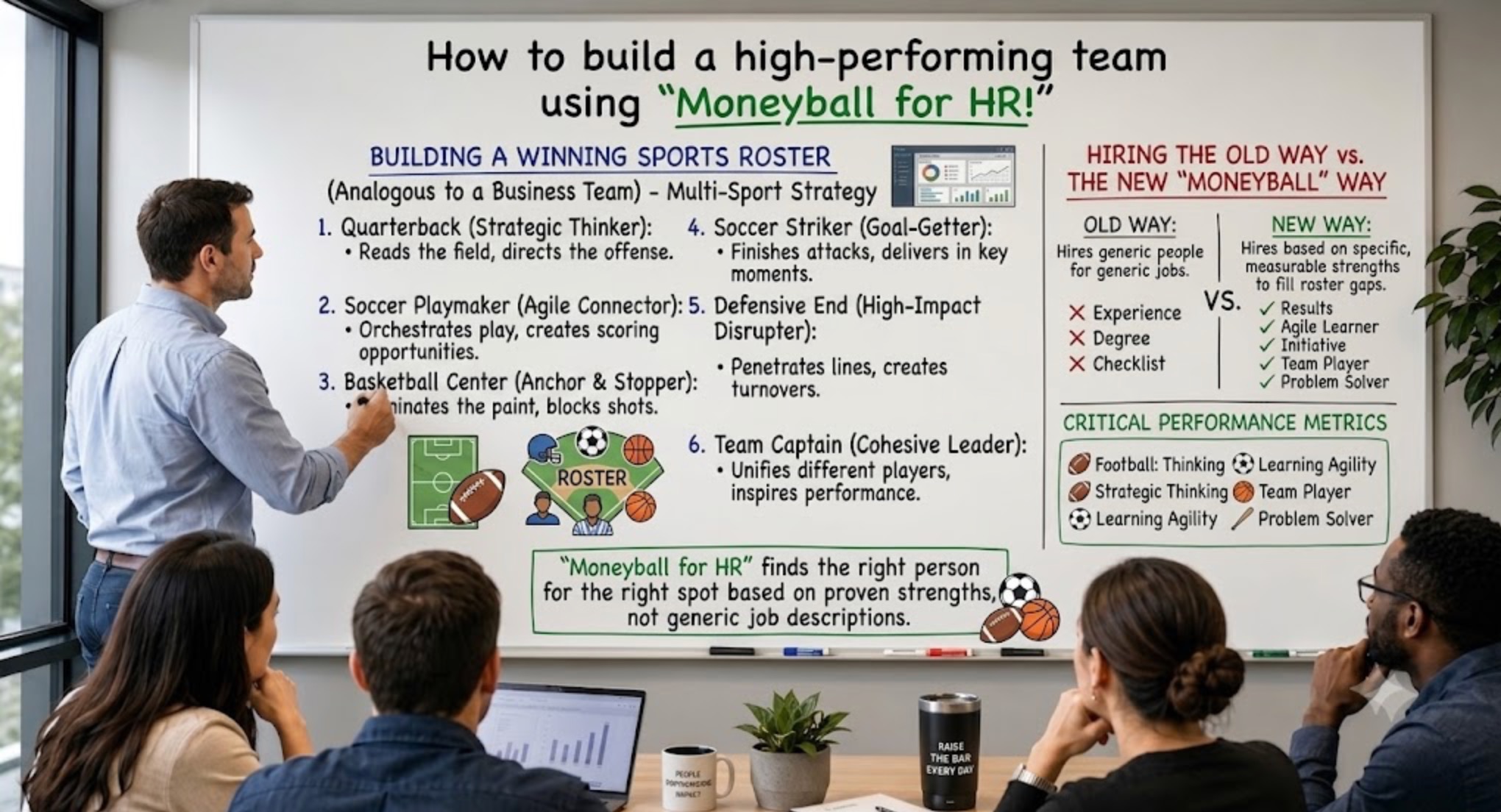
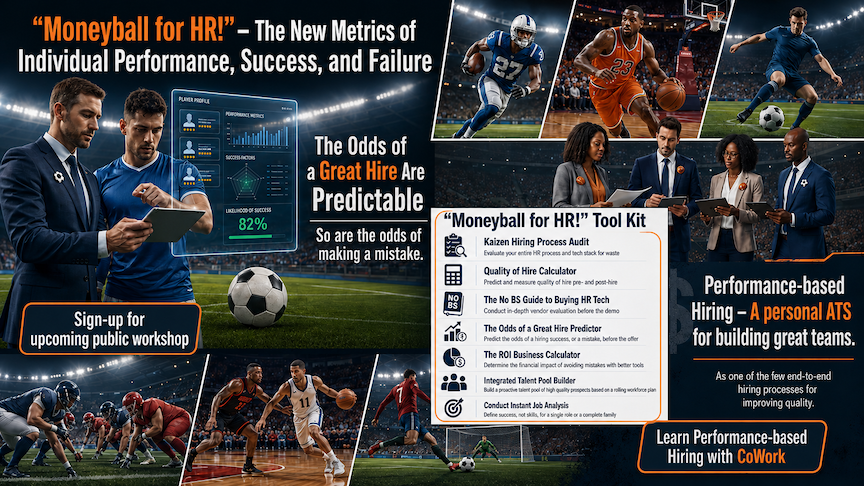
Scouting reports, not resume screens. The odds of a great hire can be stated as a number before the offer — and so can the odds of a mistake. Seven tools do the measuring; the six factors behind them are the same ones you coach against for the next two years.
What changes when you hire to the gap — and coach what you hired
A real team roster, scored
See a real team roster in action — then use AI and Performance-based Hiring to build one for your team.
Open the sample department report →Every registrant gets the Quality of Hire Claude — free
Odds are only as good as the evidence under them. A panel that agrees someone is "strong" without agreeing on what they're strong at hasn't produced evidence — it has produced a mood. The Quality of Hire Claude audits that the one way it can honestly be audited — by the evidence the interview produced. Feed it your notes or a debrief: it grades the evidence factor by factor, flags where a judgment rests on impression rather than accomplishment, and tells you what to ask next. The decision stays with people.
Install link is in your calendar invite — two minutes. Run it on one real candidate before the 24th and arrive with your own numbers.
The session — 60 minutes
- Diagnose the team before you open the req. Which spots are weak, which strengths are already covered, and why "we need another Dave" is usually the wrong answer.
- The new metrics of performance, success and failure — define success, not skills. What actually predicts whether someone performs: results, learning agility, initiative, team impact, problem solving, rate of growth. Then instant job analysis turns those into the spot you're filling — what has to get done in the first year, at what scope and scale, on a team of what size.
- Finding great team members — the 6×6 Career Portal. How the six factors and six levels turn into a live portal candidates place themselves on and justify with accomplishments, and how that one portal serves every role in the family.
- Put a number on it before the offer. Ability : Fit × Motivationn = Results. Predicting the odds of a great hire — and the odds of a mistake — from the evidence the interviews actually produced.
- Turning hiring managers into coaches and developers of people. The one that matters most. The six factors don't stop being useful at the offer — they're the development plan. What changes when a manager runs the hire as the first act of coaching rather than a handoff to HR, and why the people you fought hardest to recruit leave when nobody does.
- The tool kit, and where to start. The Kaizen hiring audit, the Quality of Hire calculator, the ROI calculator and the talent pool builder — a personal ATS for building great teams. Which one to run first, on which job.
Build the Team, Then Coach It · Thu, Sept 24 · 11:00 AM PT
Free · 60 minutes with Lou Adler. The invite carries the Zoom link plus your free Quality of Hire Claude. Can't make it? We'll send the replay.
✓ You're registered.
The invite is on its way — accept it and you're set. Two things worth doing before the 24th: